Patients
"Some arrive scared stiff. My job is to get them where they need to be, without the jargon knocking them sideways."
Learning with our Carers.
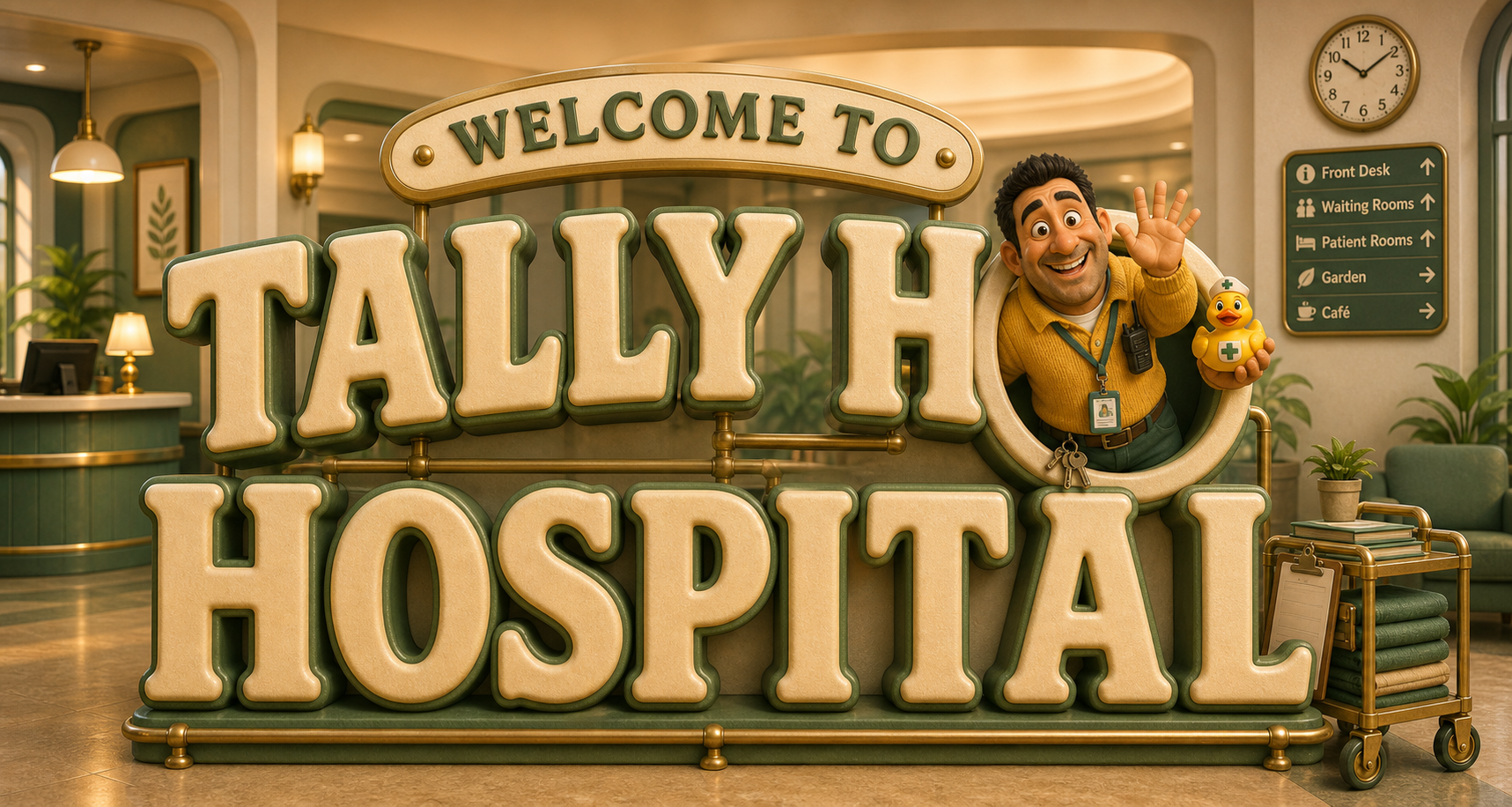
Pete the Porter is about to take you on a stroll through the hospital he knows, the people he loves, and the ideas worth checking before the duck starts quacking.
The story starts with the person at the front desk, not the building behind him.
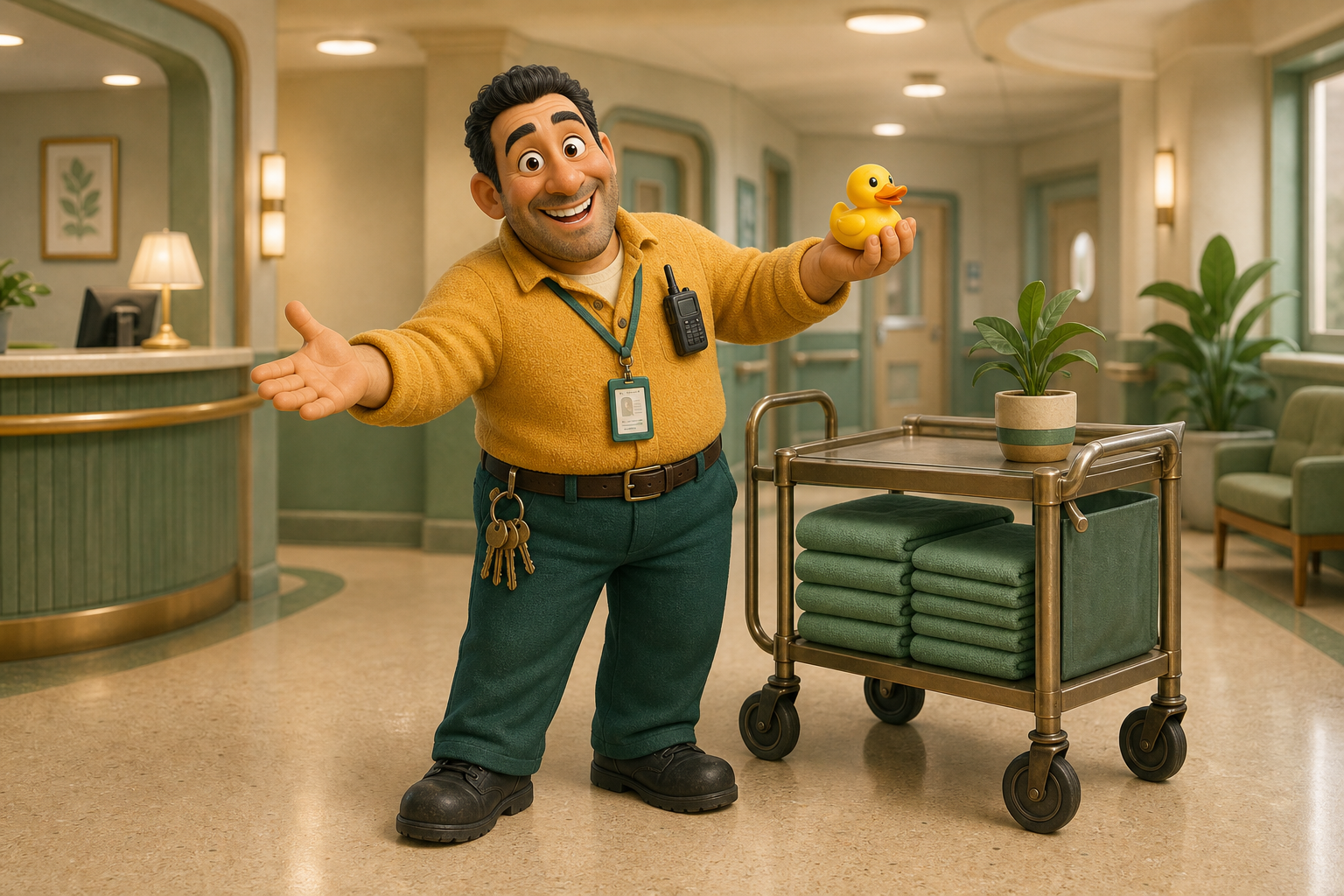
I've parked the trolley for two minutes so I can show you round properly. Bring your curiosity, keep your common sense handy, and if something sounds a bit too shiny, the duck will let us know.
Quack quack, only when required.
Pete came down from Nottingham with a good pair of shoes, a better sense of humour, and the sort of practical kindness you cannot teach on a course. Back home, "Eh up me duck" meant hello. At Tally Ho, it became his way of making nervous people feel a little less alone.
He is not a doctor, and he would be the first to tell you. But he knows the rhythm of a hospital: which corridor calms people down, which trolley has a wobbly wheel, which consultant needs the right set of notes before the whole clinic starts making noises.
That is Pete's gift. He carries the ordinary things that make care possible: patients, folders, equipment, messages, cups of tea, and the human bits that can get lost when everyone is busy being clever.
And because he has heard plenty of nonsense in his time, he keeps a little yellow duck in his pocket. When a claim sounds too shiny, too certain, or too salesy, Pete gives it a squeeze. Quack quack. Not rude. Just a reminder to check the evidence.
In Nottingham, "me duck" can be a friendly hello. Pete keeps that warmth. He wants people to feel welcomed, not talked down to.
But there is a sharper joke tucked inside it. In 17th-century England, "quack" became a word for a medical charlatan, shortened from "quacksalver", with roots in the Dutch "kwakzalver". So Pete's duck is not just cute. It is his tiny yellow alarm bell for medical nonsense.
When a claim sounds too shiny, too certain, or too salesy, Pete gives the duck a squeeze. Not to be rude. Just to say: lovely story, now show us the evidence.
Pete moves through the building like a quiet camera. He sees the debate, the kindness, the chaos and the tiny practical things that make healthcare work.
"Some arrive scared stiff. My job is to get them where they need to be, without the jargon knocking them sideways."
"Reggie still trusts paper. Axis trusts tablets. I trust whichever one has the answer on it."
"A hospital can have all the science in the world. It still needs someone to find the right cable."
"I listen. That is how I know when something sounds useful, and when it sounds like duck food."
Pete does not give lectures. He pushes the trolley, stops for people, and lets the hospital explain itself through the characters he meets.
He often starts his rounds in the canteen, purely for professional reasons, obviously. There is food, there is gossip, and there is Cynthia Cinnabon, Pete's very special friend with a ladle, a laugh, and a habit of making healthy things taste suspiciously lovely.
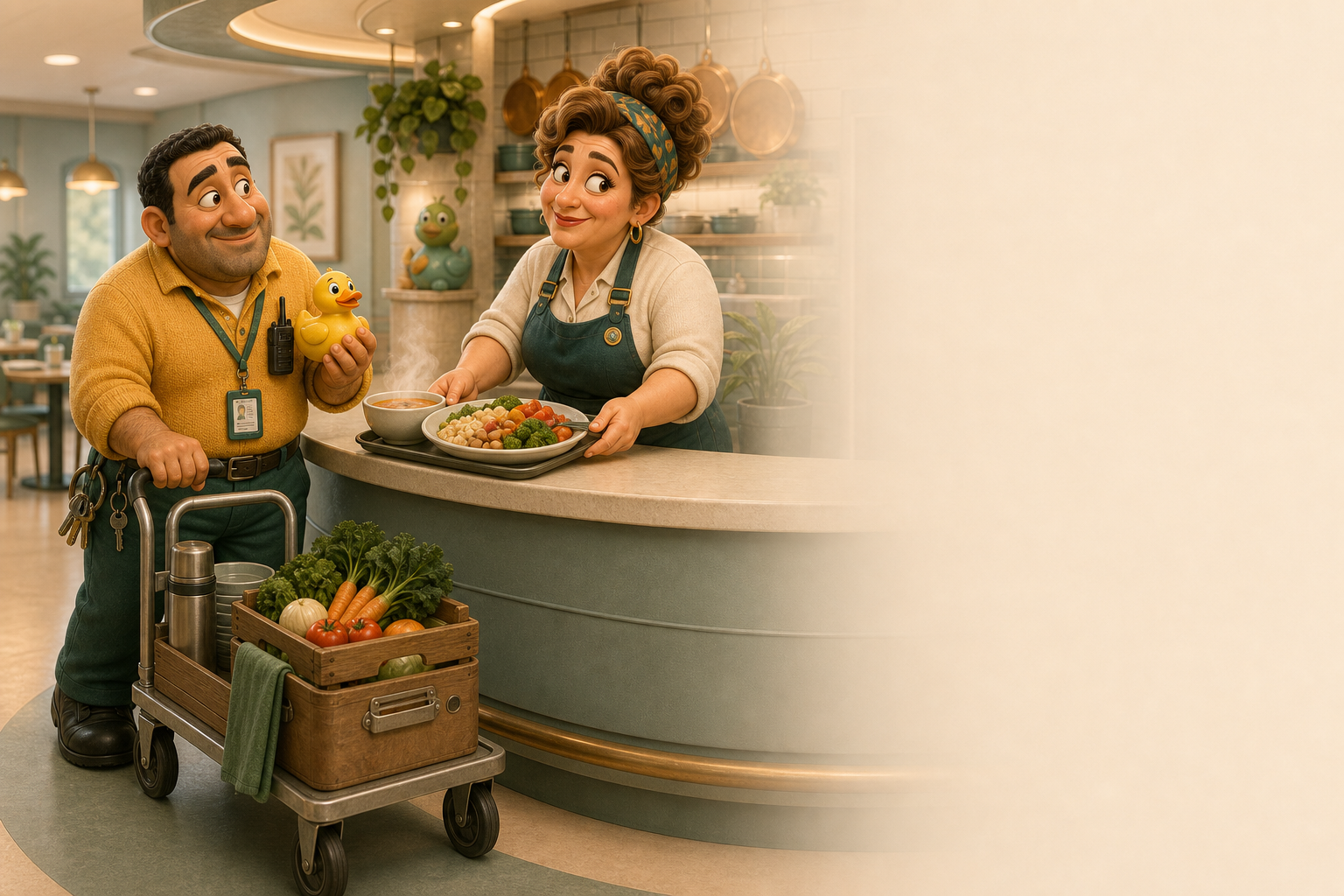
Cynthia Cinnabon turns fibre into something warm, tasty and faintly outrageous. Pete pops in for a cuppa and somehow leaves knowing more about beans, breakfast and better habits.
"She makes fibre sound less like homework and more like lunch. Which helps." Pete's round note
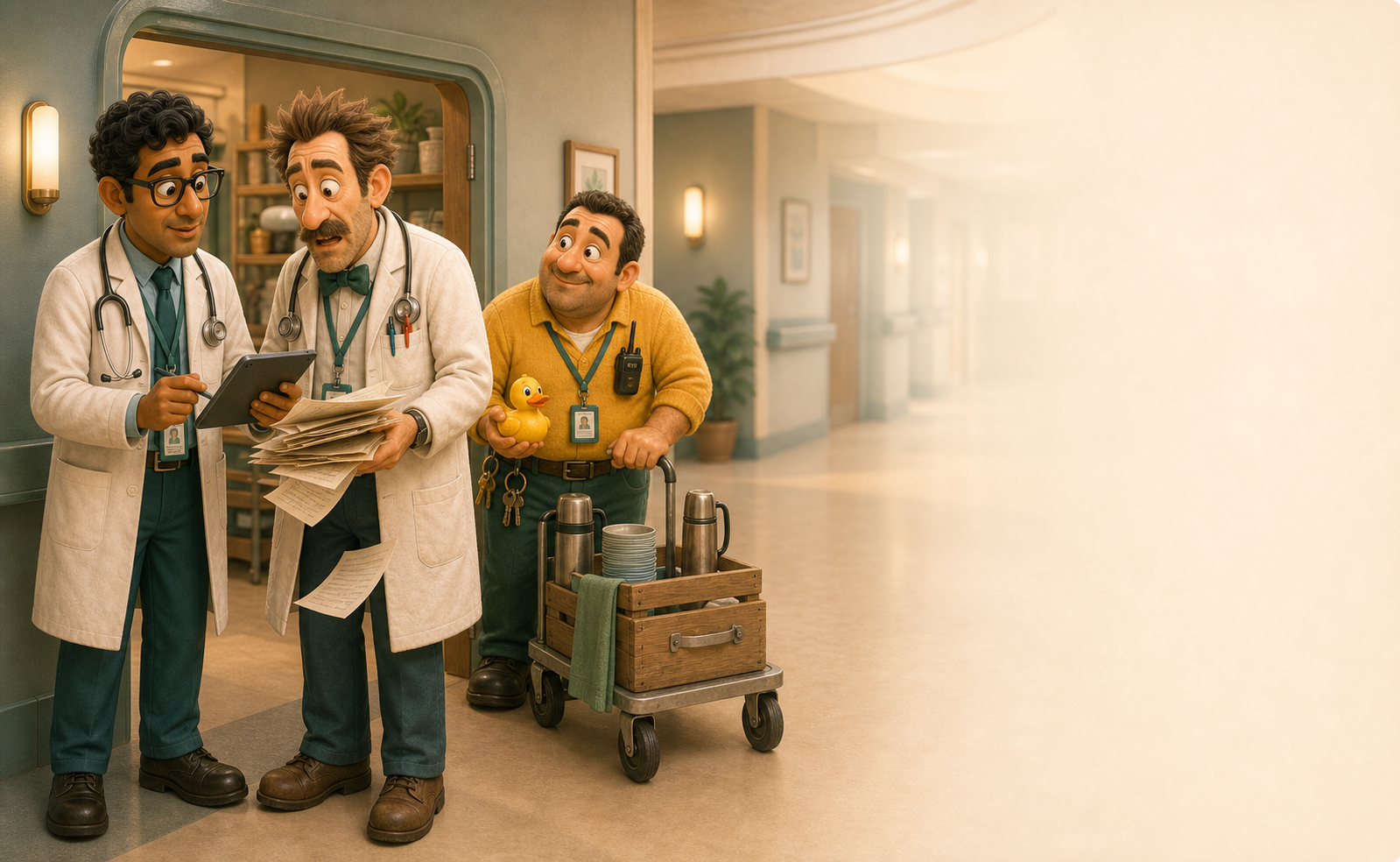
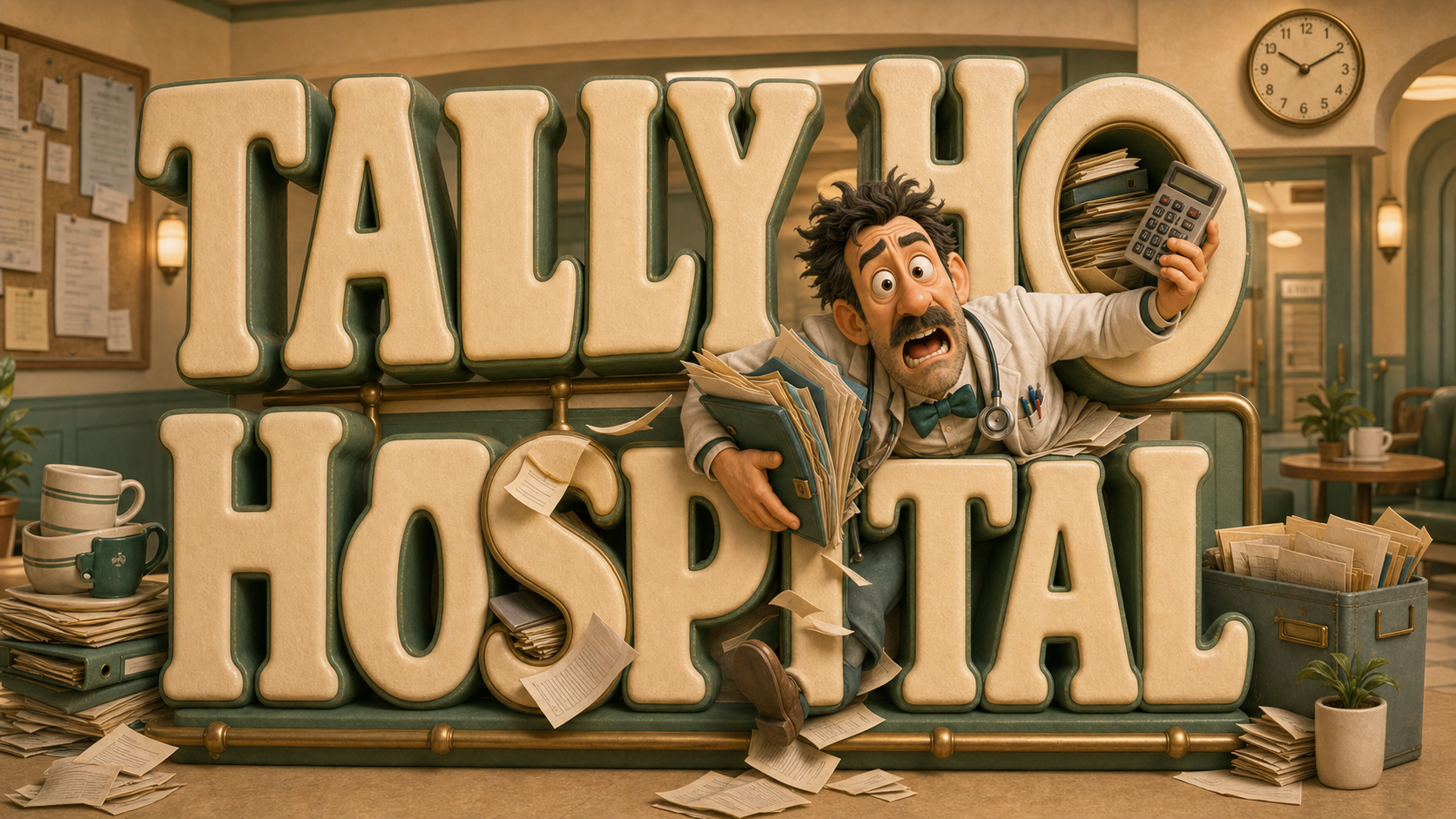
Dr Axis arrives with smart glasses, tablet and precision. Dr Reggie Gland arrives with a folder avalanche and a perfectly sincere worry. Pete arrives with the duck, just in case.
"One of them trusts the cloud. One of them trusts a clipboard. I trust the one who can find the answer." Pete's round note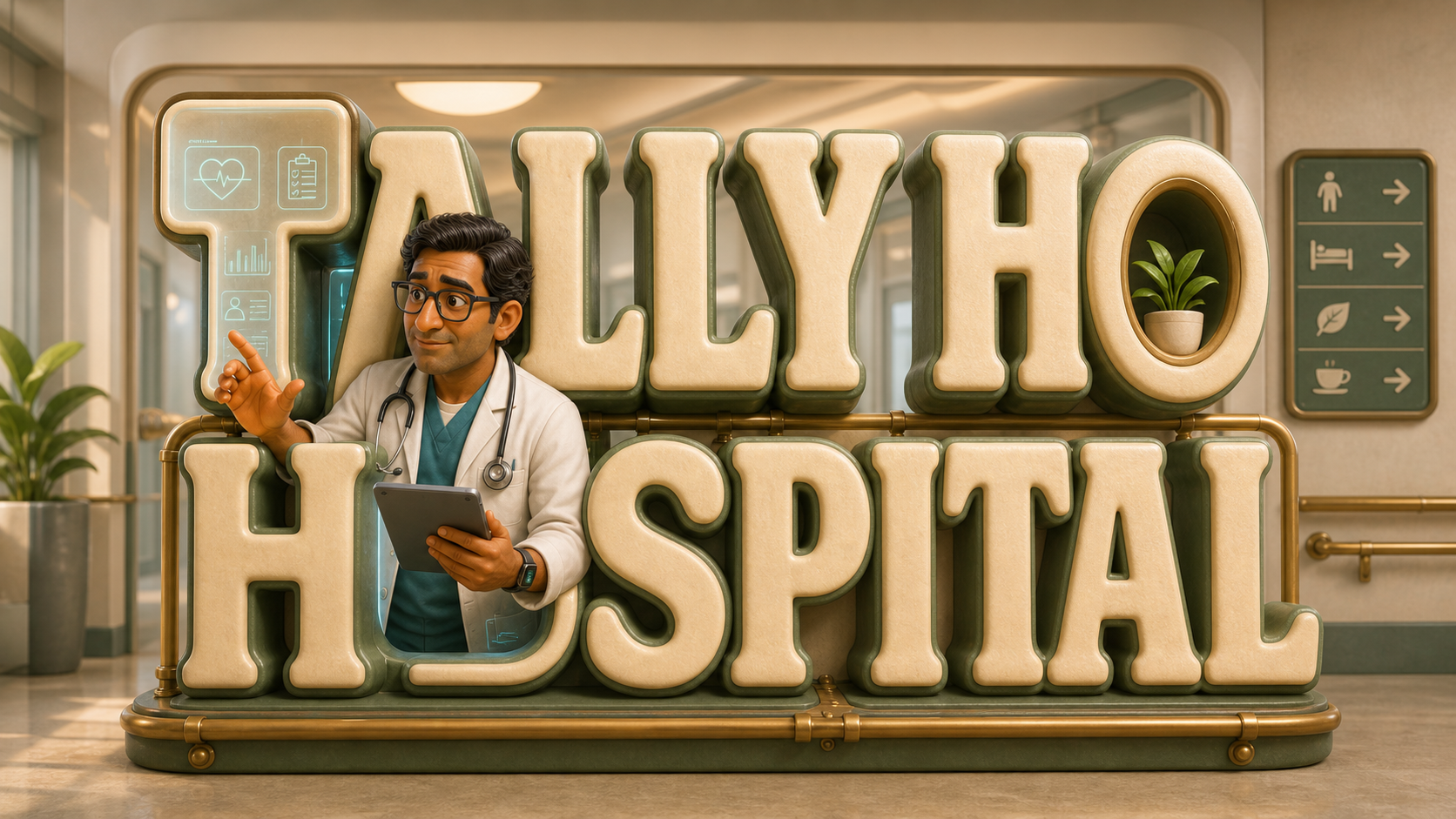
Professor Klara Zenith widens the lens. Global evidence, local lives, calmer thinking. Pete listens because she has the rare gift of making complicated things feel less sharp around the edges.
"When Klara talks, even the duck behaves itself." Pete's round note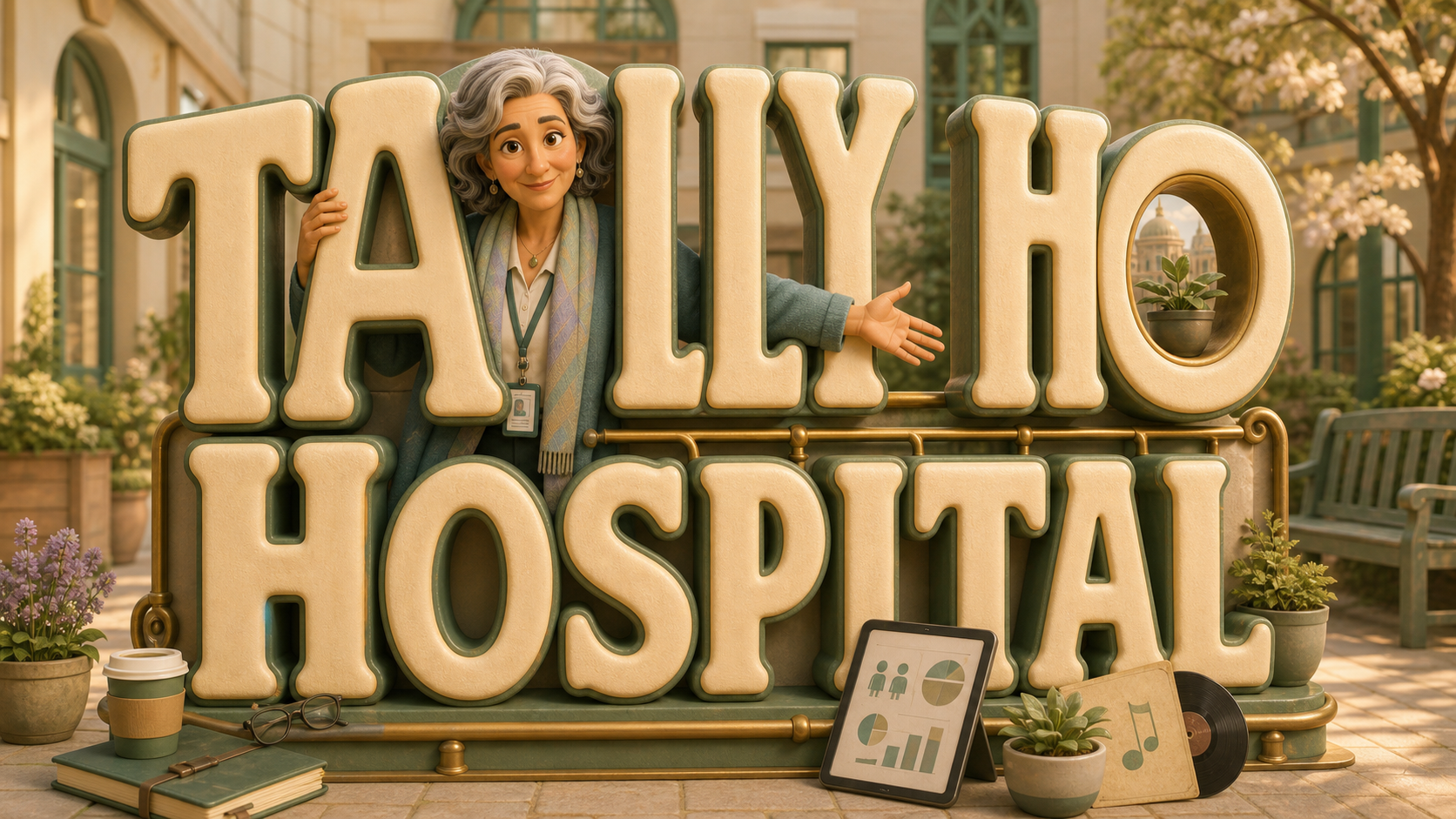
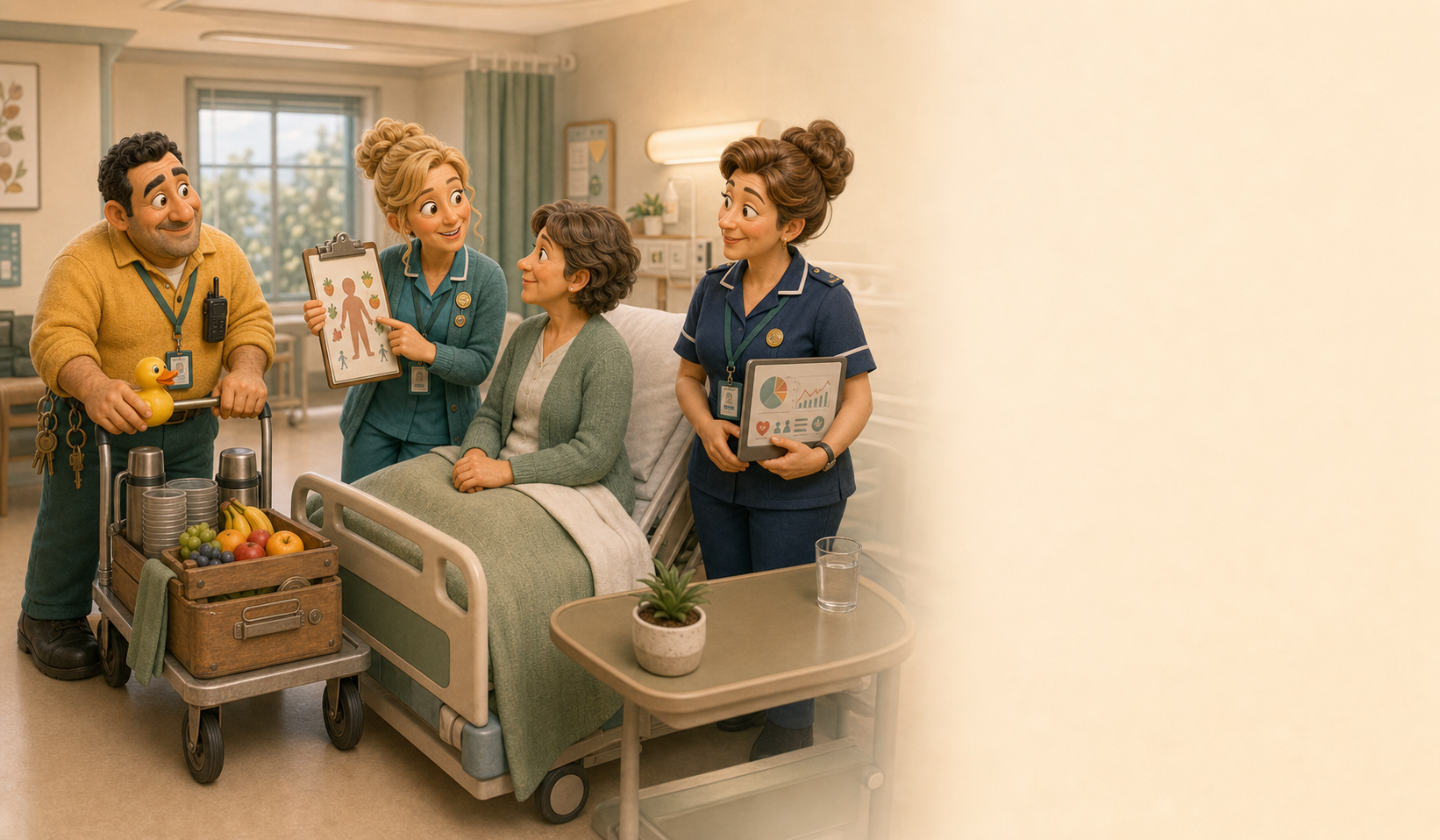
Fiona Fibre makes difficult ideas feel gentle at the bedside. Penny Power makes sure the whole ward can actually live up to the promises. Pete has seen both things matter.
"Fiona explains it so nobody feels daft. Penny makes sure it still works on a wet Tuesday." Pete's round note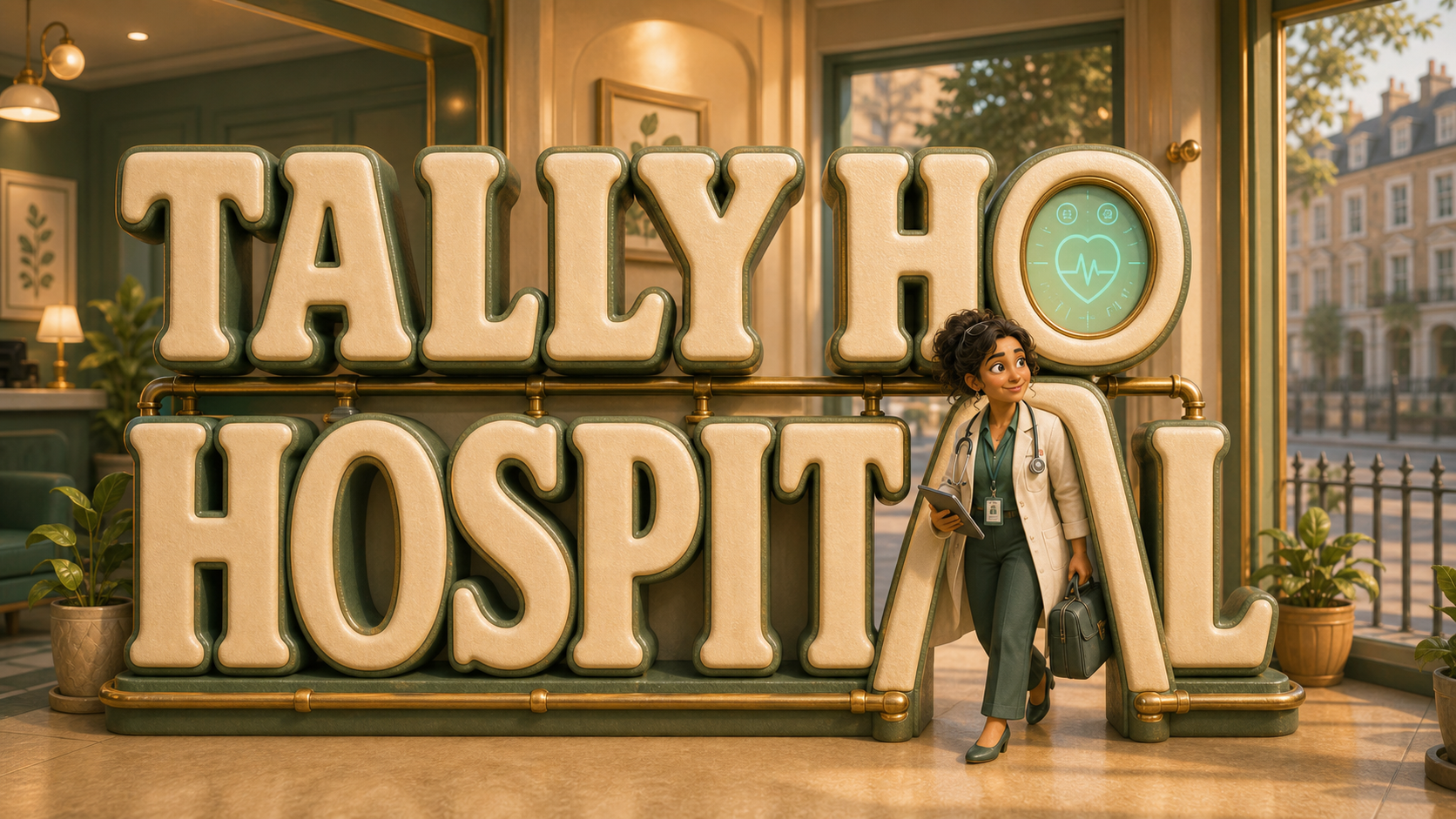
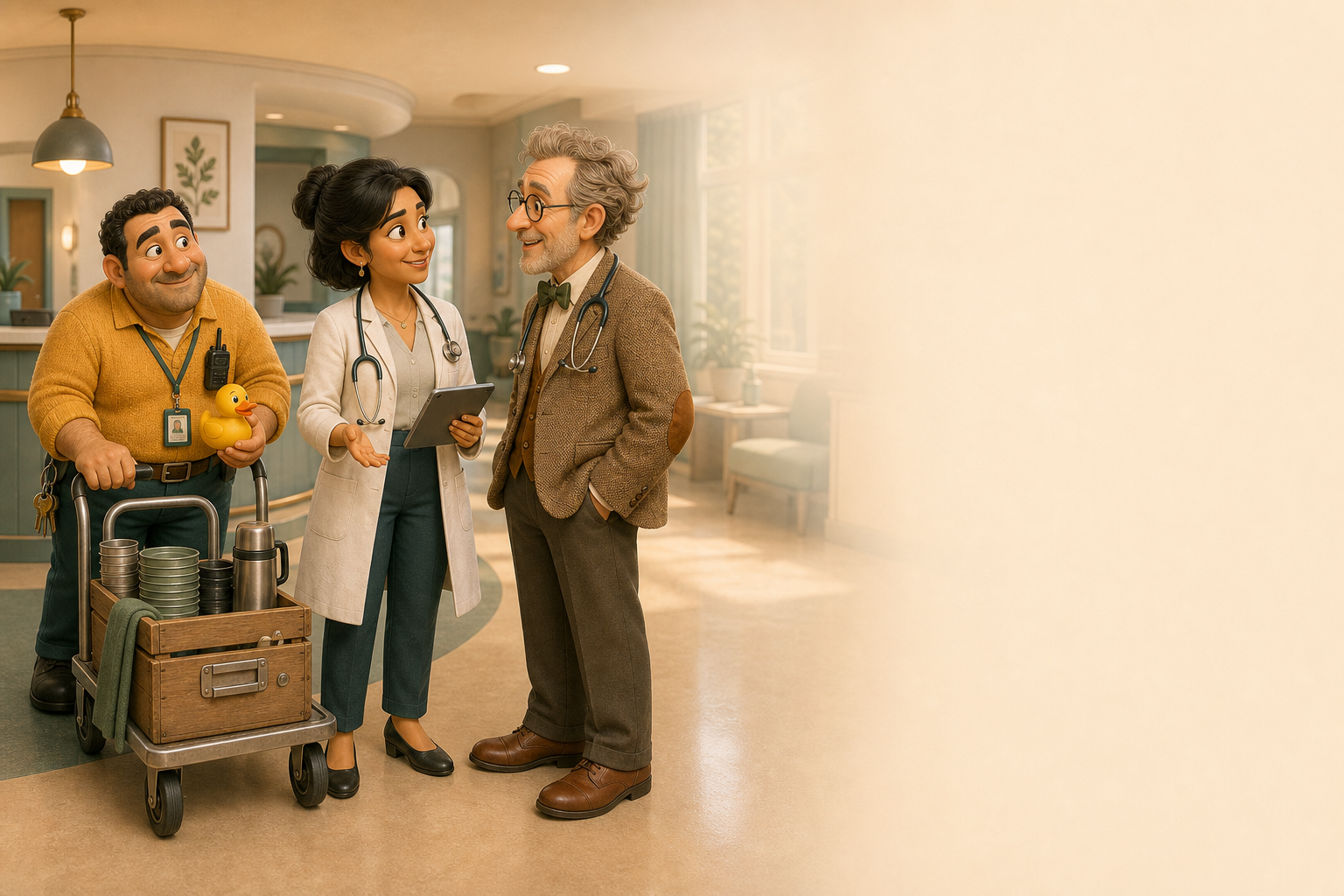
Dr Zahra Future moves between hospital and community with the confidence of a generation raised on technology. Dr Alistair Rota keeps the old GP art alive: continuity, families, context, and knowing the person behind the result.
"Zahra knows where medicine is heading. Rota knows where everyone lives." Pete's round note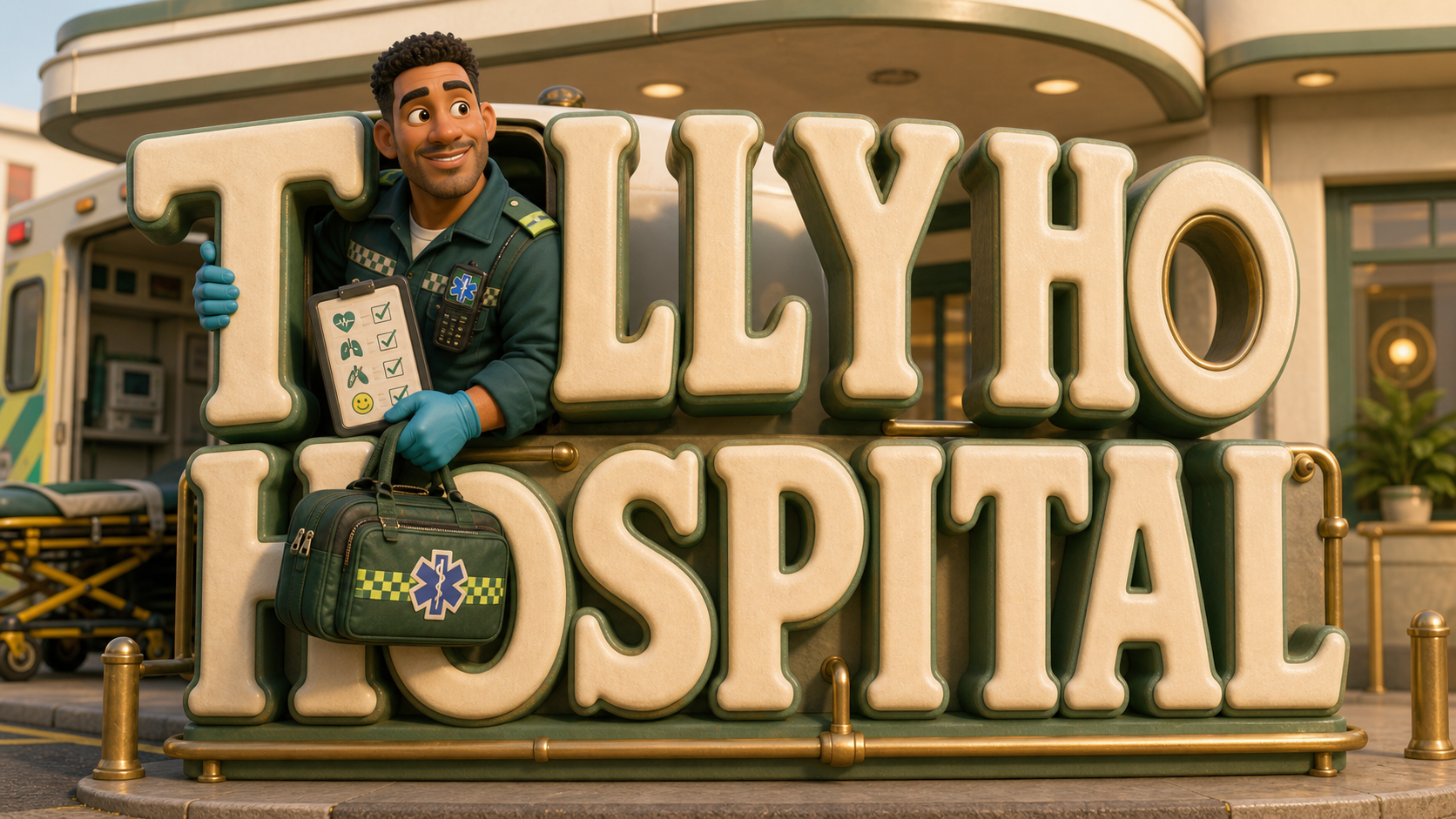
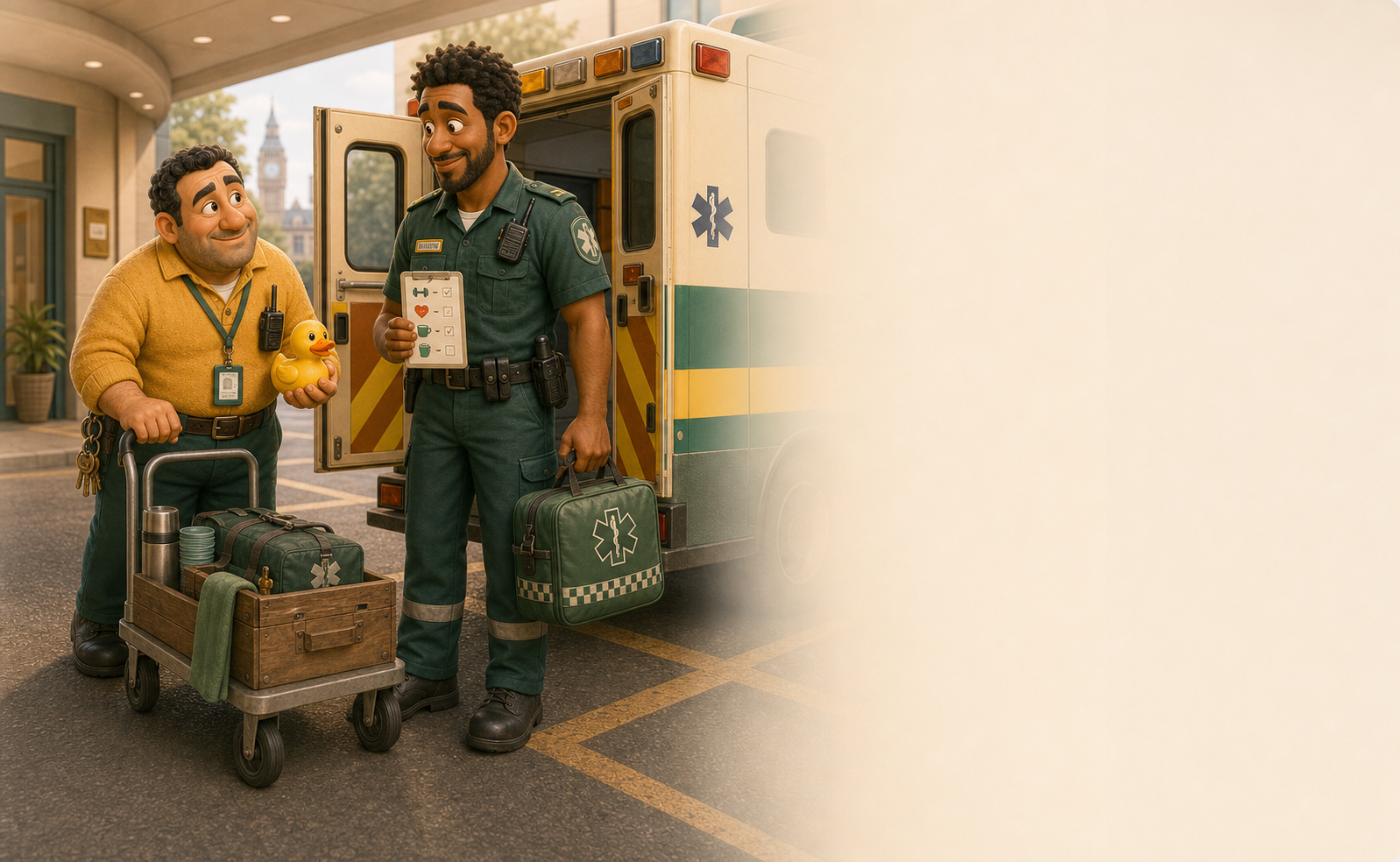
Sam Chase arrives before panic gets properly organised. He brings discipline, routine, resilience and the sort of steady presence that makes everyone else breathe a little slower.
"Sam does not flap. Even the emergency seems to stand up straighter when he turns up." Pete's round note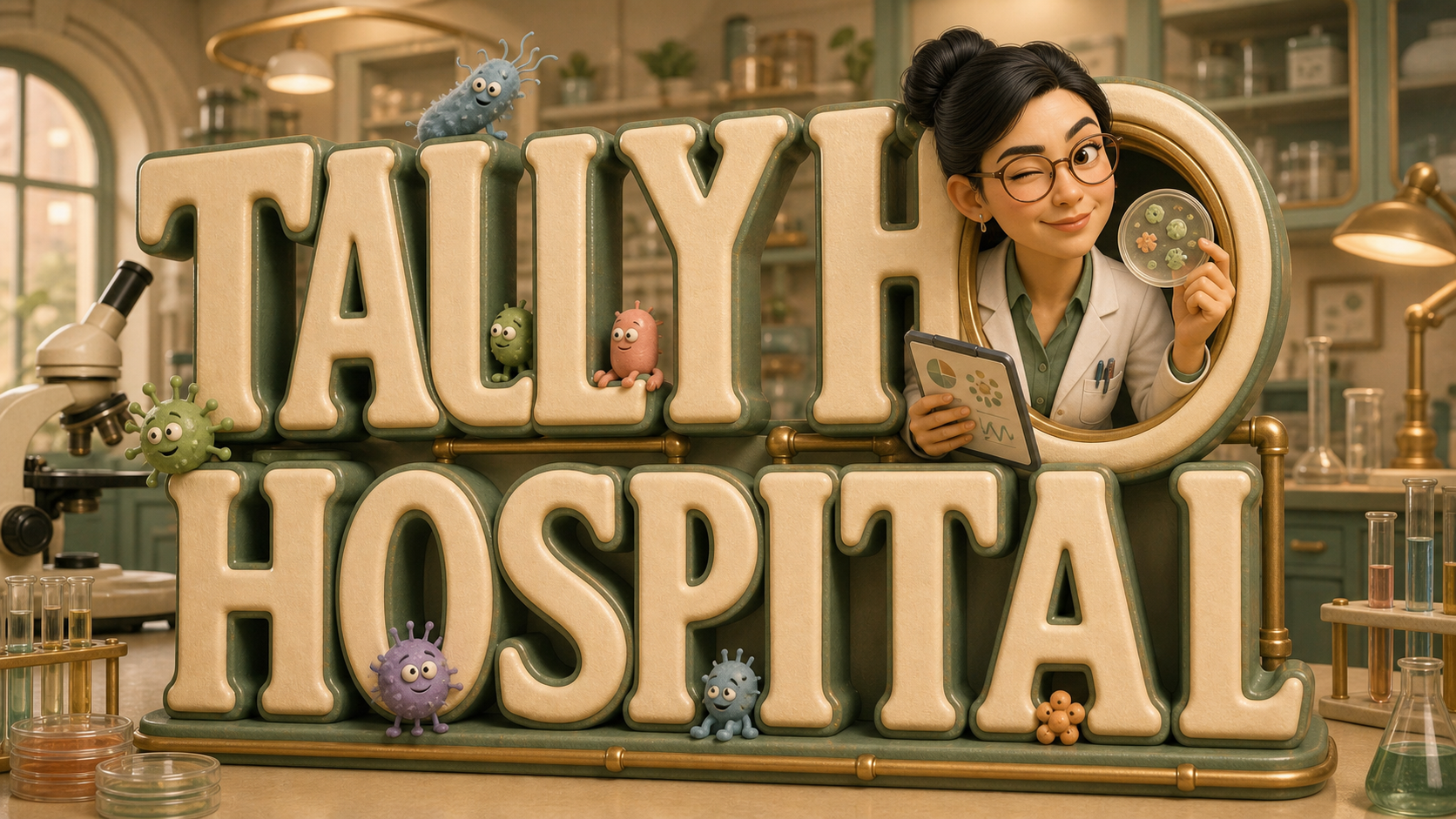
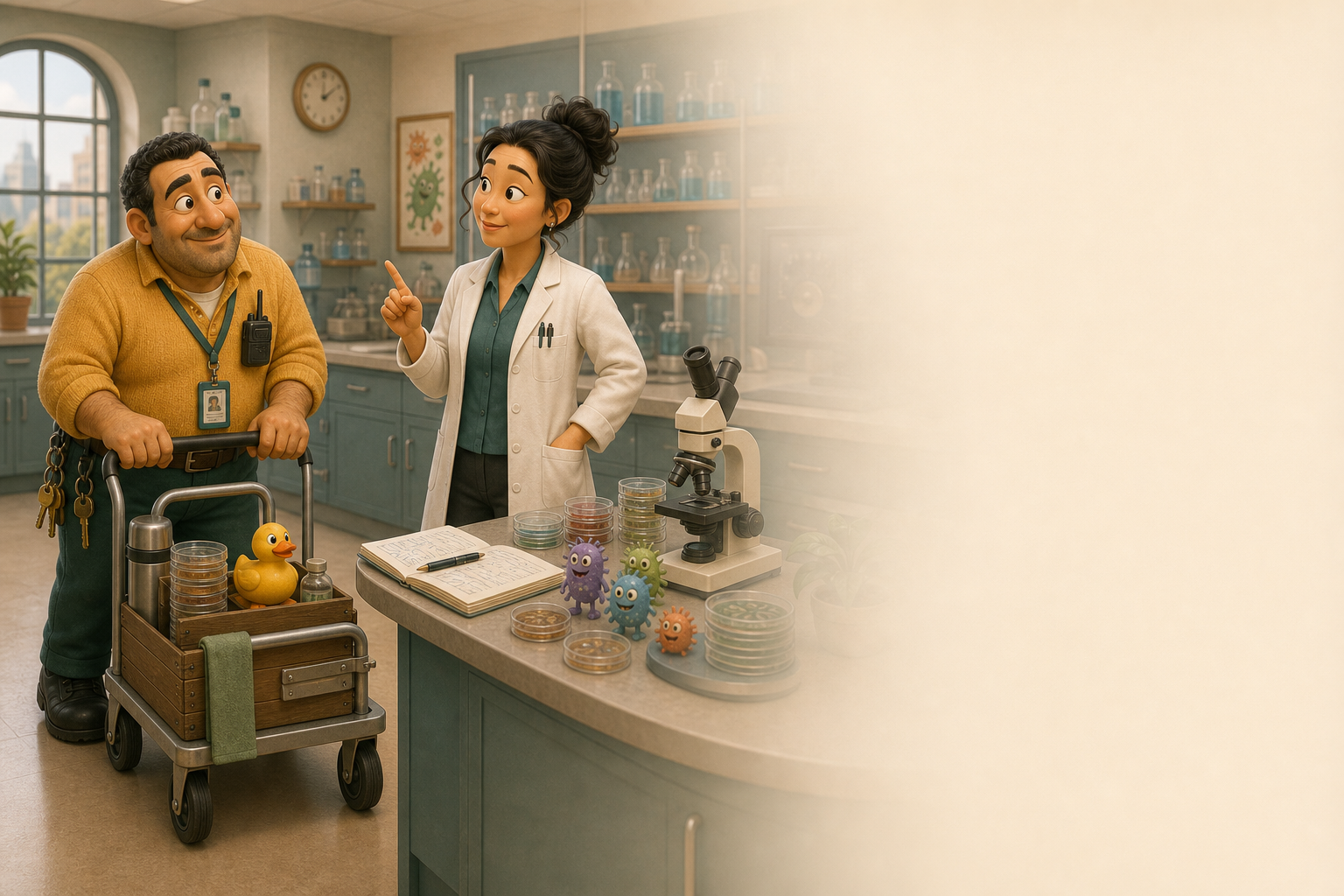
Dr Flora Mei, PhD, studies the bugs that change the body from the inside out. She is exacting, proud of the research, and quite right to remind everyone that a PhD is not a decorative comma.
"If Flora says the evidence is not ready, I do not argue. I just move the trolley quietly." Pete's round noteThese are not job titles on a wall. They are the people Pete learns from, teases gently, and trusts to turn evidence into something ordinary people can use.
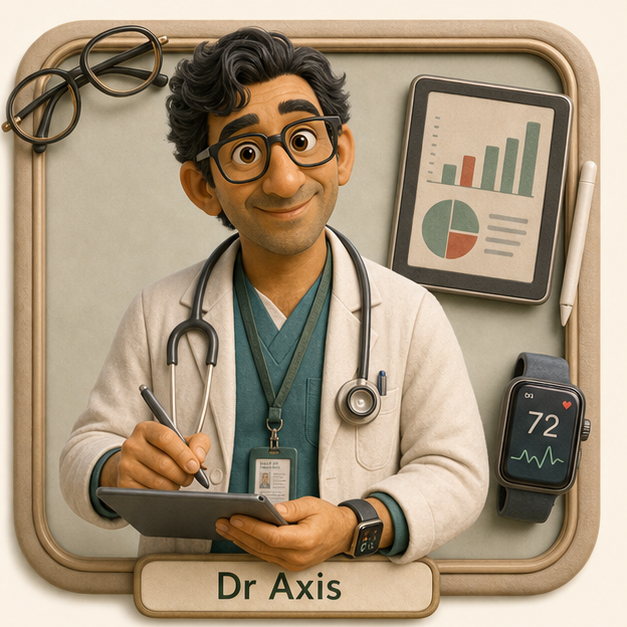
"Axis spots a wobbly claim before I have even reached for the duck."
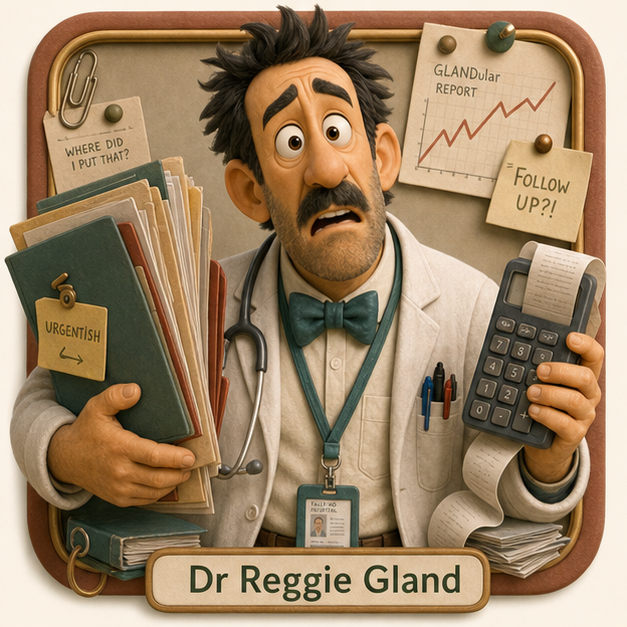
"Brilliant man. Carries folders like a magician carries cards. Usually drops one."
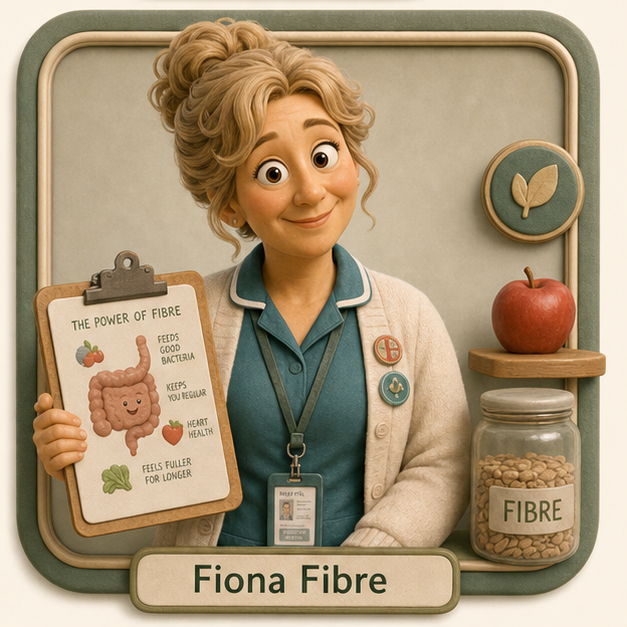
"Fiona can explain a tricky thing without making anyone feel daft. Rare skill, that."
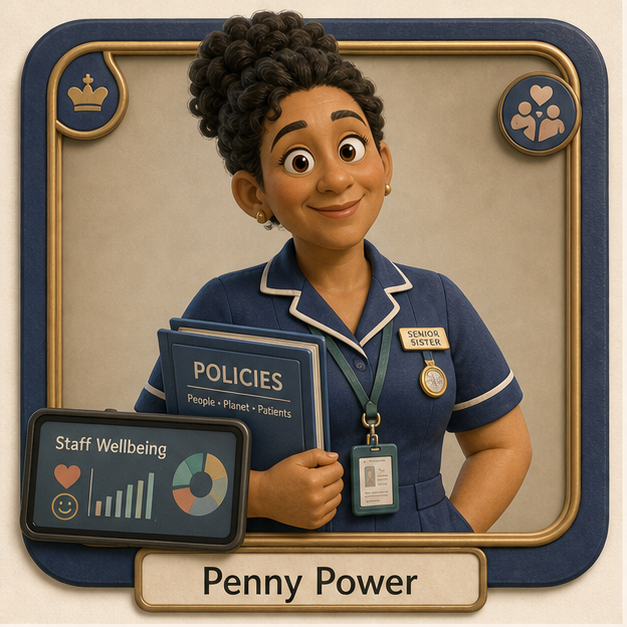
"If Penny says it will work on a Tuesday morning, it might actually work."
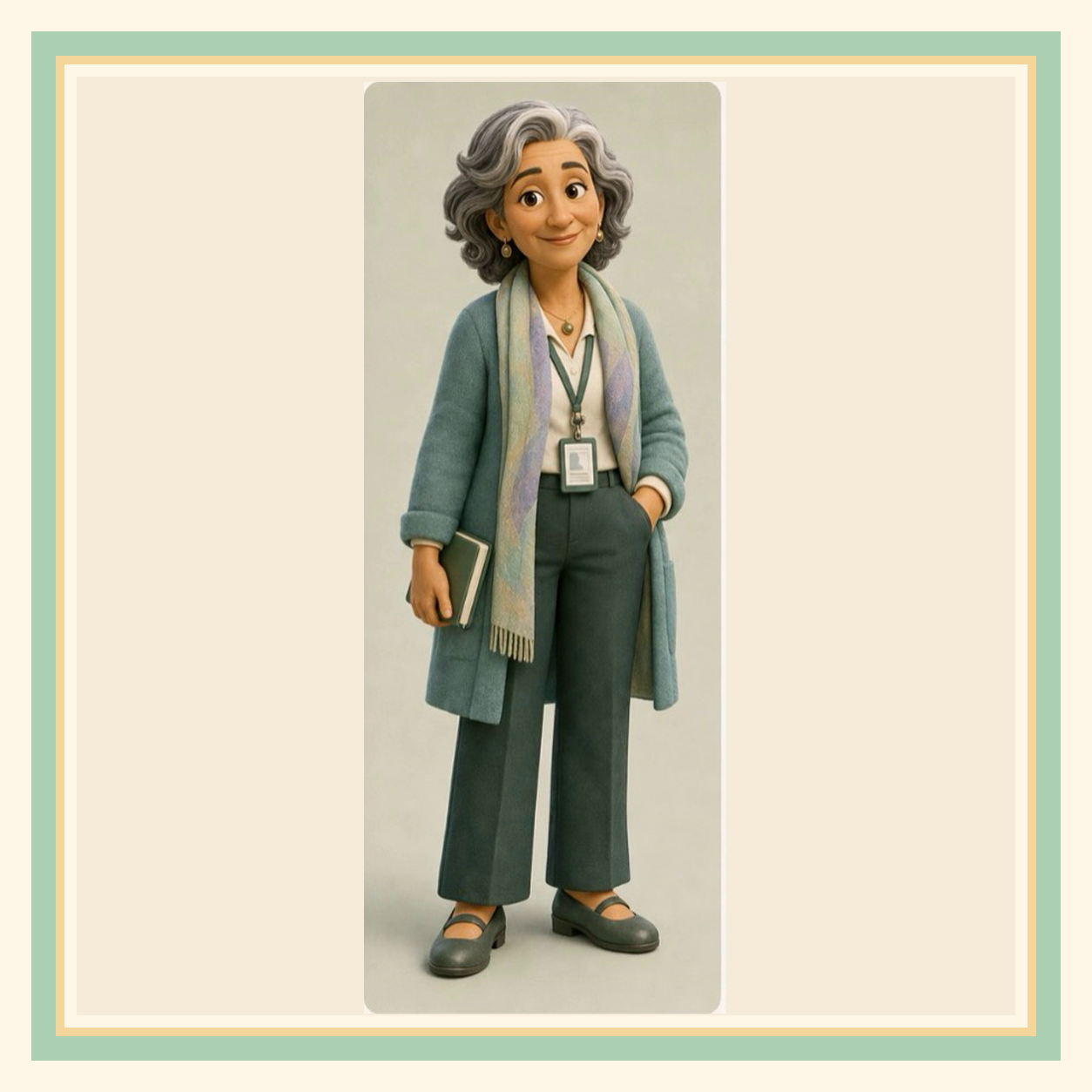
"Klara can calm a room just by making everyone think bigger and breathe slower."

"Zahra walks between hospital and community like she knows where medicine is heading."
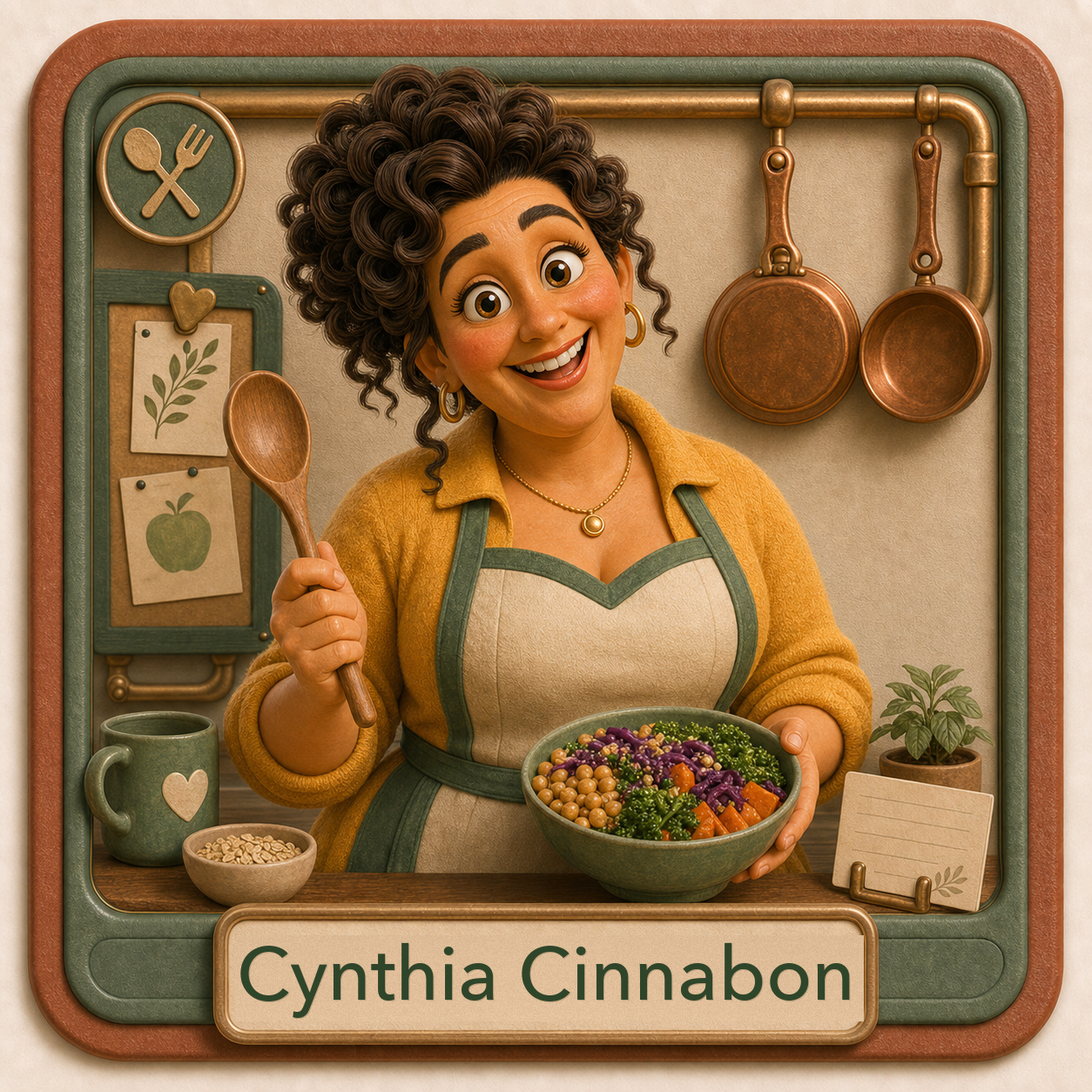
"Cynthia makes fibre sound less like punishment and more like lunch. I approve."
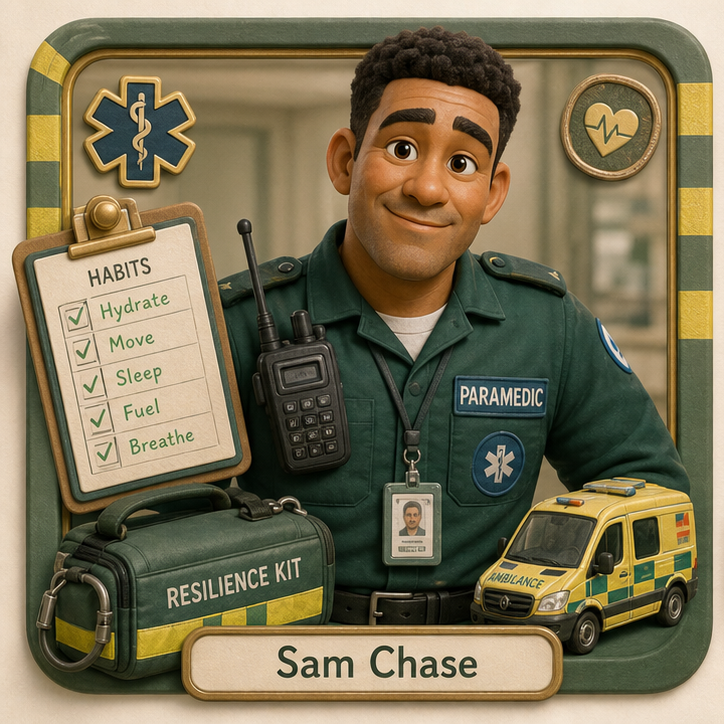
"Sam is calm before the emergency has even decided to be an emergency."
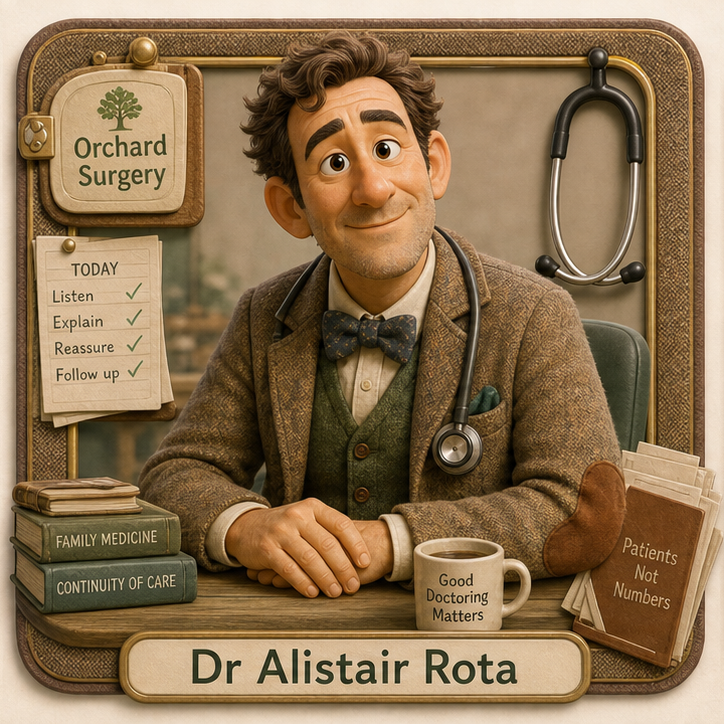
"Rota knows whole families, not just results. That matters more than people think."
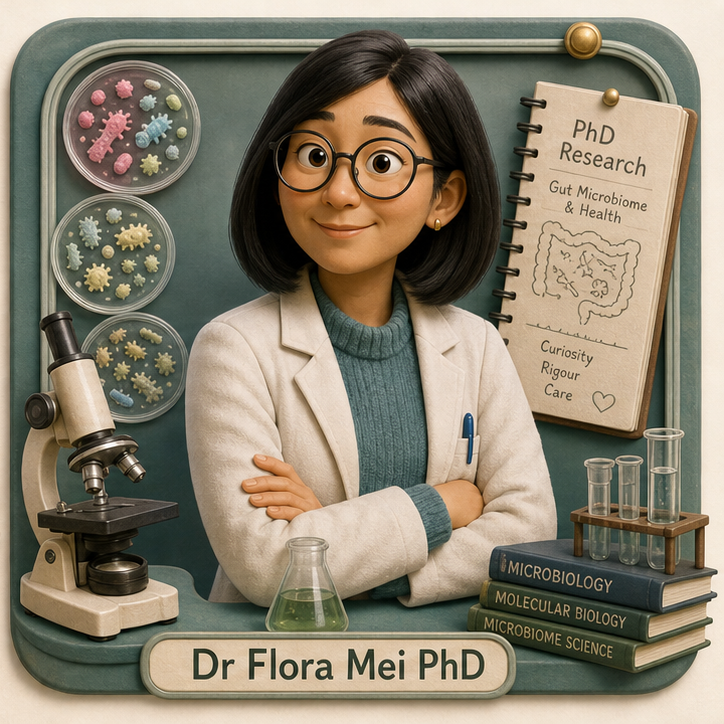
"Flora studies tiny things with enormous consequences. And yes, she did the PhD."
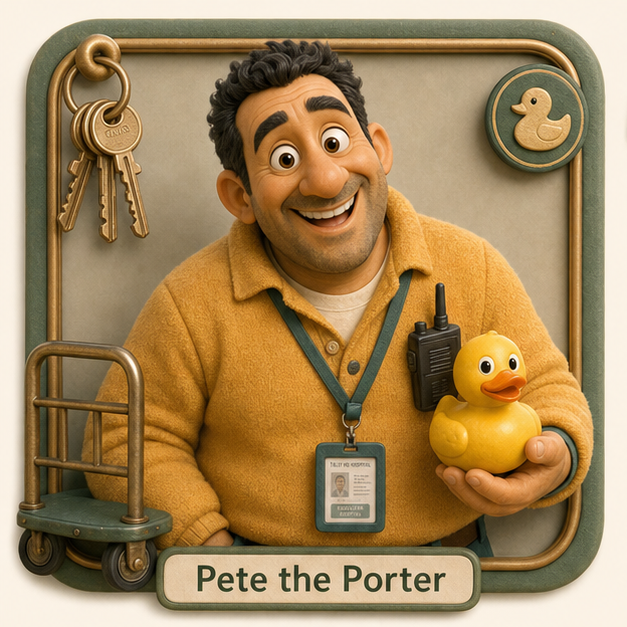
"I am mostly here to move things along. Sometimes that includes the conversation."
Tally Ho Hospital sits in a fictional Bloomsbury-Camden corner of modern London: close to libraries, squares, teaching hospitals, old arguments, new technology, and the ordinary communities healthcare is supposed to serve.
"From Nottingham to Bloomsbury," Pete says, "I have learned one thing. Medicine is clever, but people still need someone to show them where to go."
Leave your details if you would like Tally Ho Hospital updates, episode news, educational notes, and the odd quack check from the fallacy duck.
We will only use this for the permissions you choose, and every email will include an unsubscribe link.
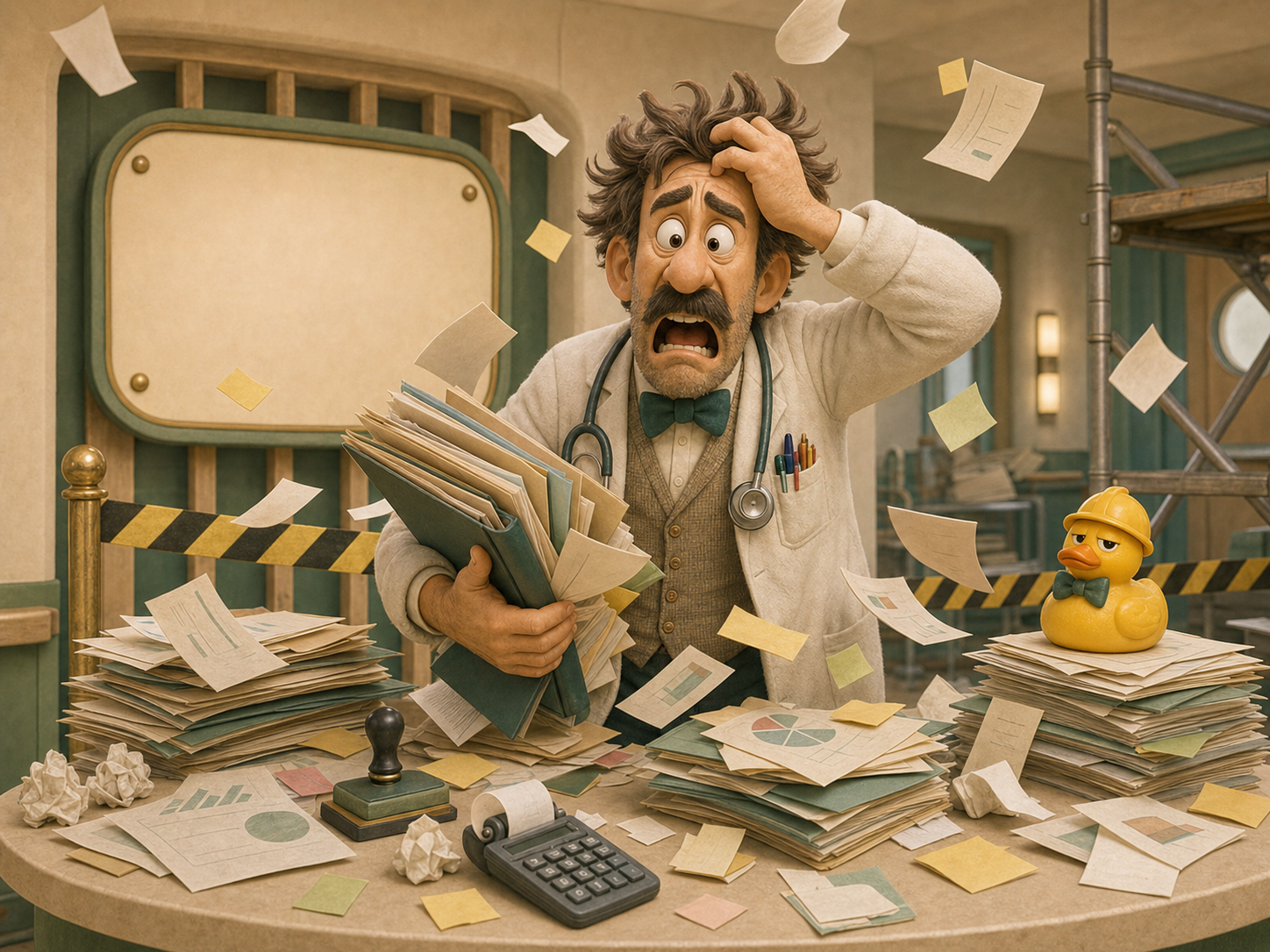
The visitor list uses a consent-aware mailing setup. Tally Ho Hospital is a fictional animated education project, and the signup form is not for personal medical advice or urgent clinical questions.
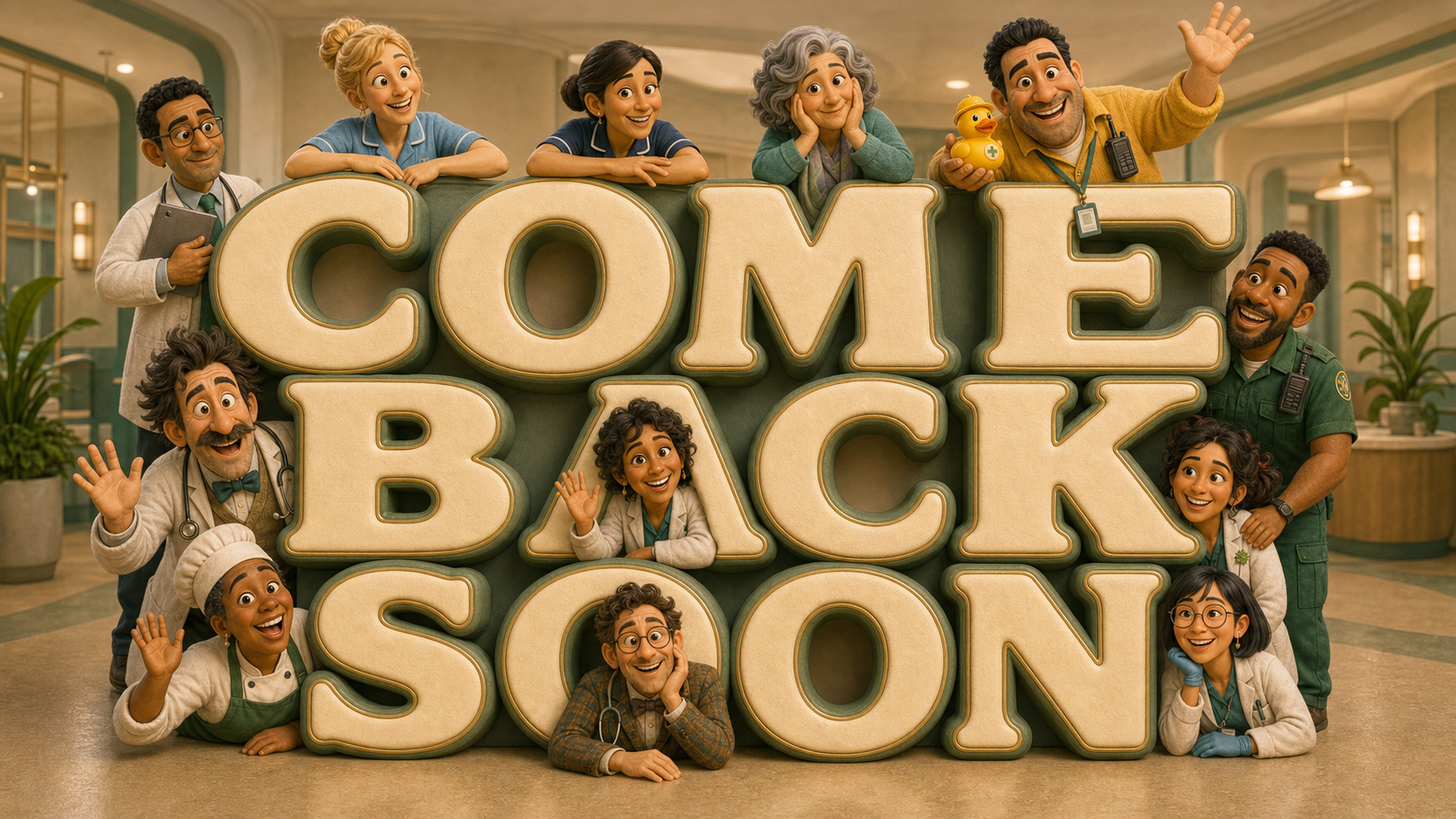
Work hard, play kind.
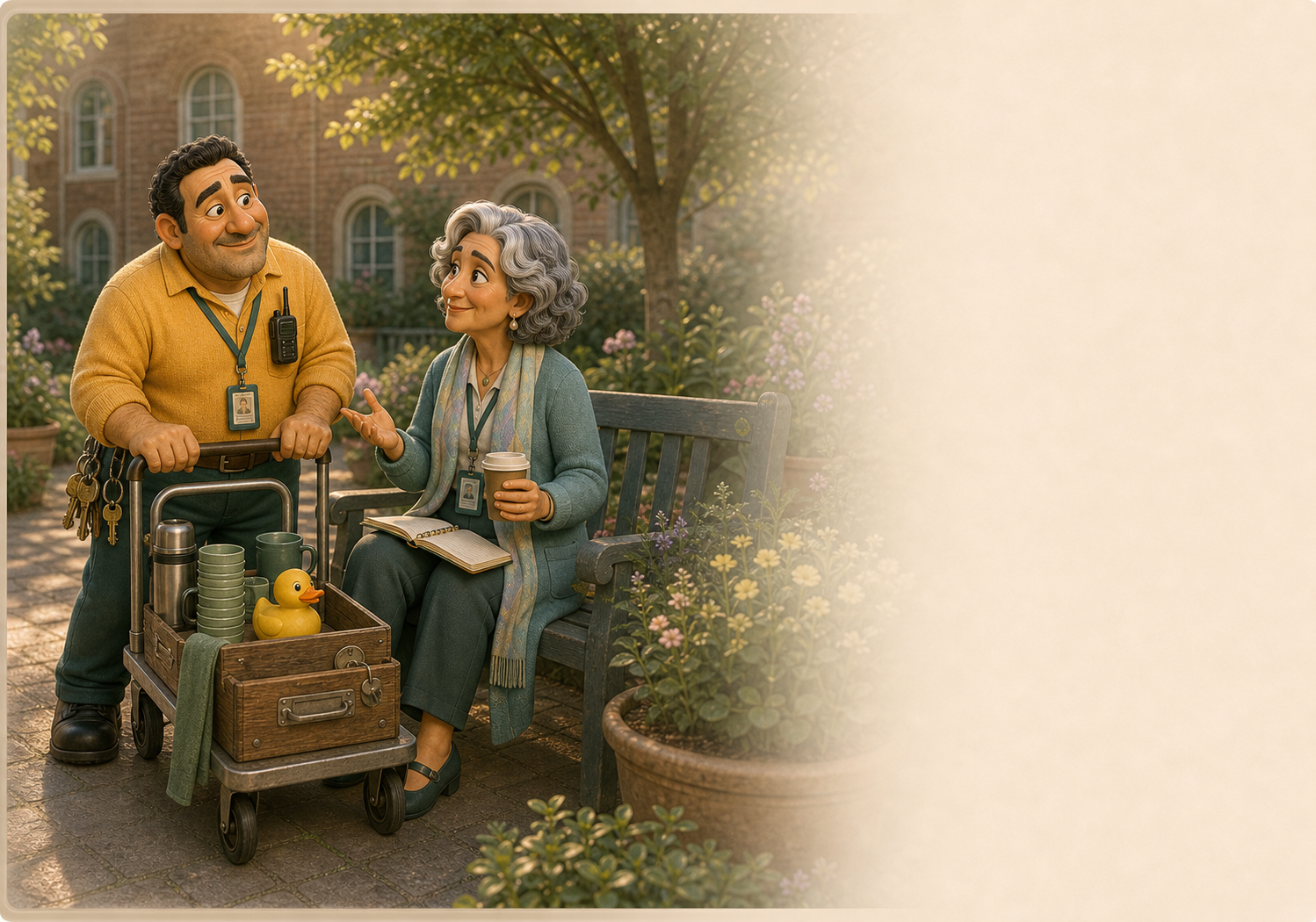
The hospital is not only clinics and corridors. Pete also sees the kettle moments, kitchen classes, garden laughs and after-work jazz that make the team feel human.